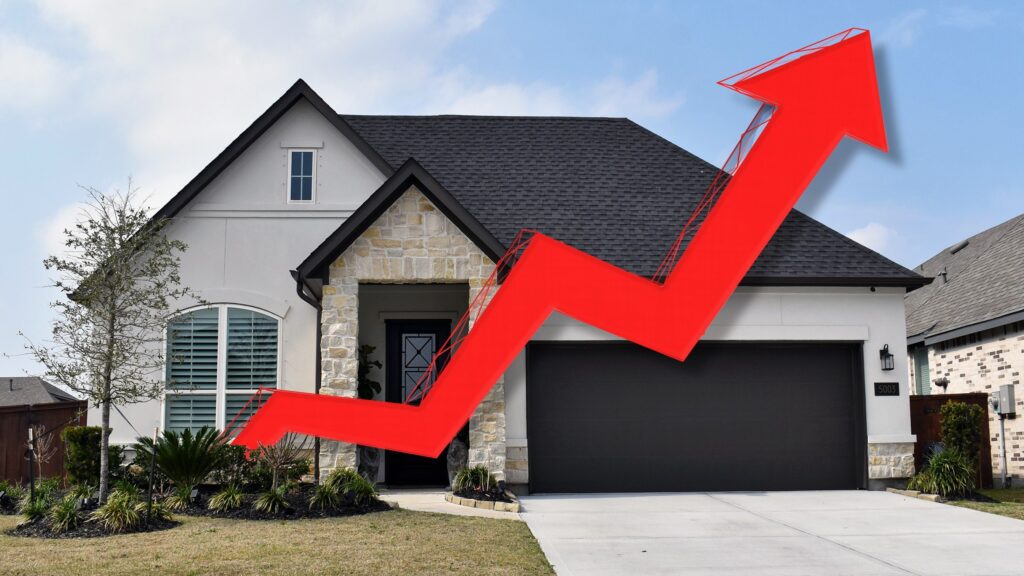
As summer season unofficially starts, loan charges have climbed to their absolute best stage in 9 months, propelled upper by way of hovering power prices stemming from the continued battle within the Center East.
Freddie Mac reported remaining Thursday that the typical 30-year fastened house mortgage fee reached 6.51%, a benchmark no longer observed since past due August 2025—a length ruled by way of financial uncertainty right through the
So, how did we get right here, and what is subsequent for the housing marketplace because it enters the historically bustling past due spring and early summer season purchasing season?
A have a look at Freddie Mac information supplies a significant clue. Charges have been on a quite stable downward trajectory since remaining June, even dipping beneath 6% in past due February and achieving a three-year low. Then, the dynamic all of a sudden shifted.
Days after Trump management officers celebrated decrease loan charges, U.S. forces introduced Operation Epic Fury towards Iran, resulting in a partial blockade of the Strait of Hormuz that has critically disrupted the worldwide oil provide.
How the warfare impacts loan charges
The Iran warfare, now coming near its three-month mark, spiked oil costs and upended provide chains, riding the whole inflation fee to a three-year prime.
Then again, Realtor.com® senior economist Jake Krimmel says that what is much more necessary is that the warfare is elevating expectancies for costs one day.
“When bond traders be expecting upper costs down the street, they call for upper returns,” says Krimmel. In different phrases, traders who purchase debt call for upper rates of interest when inflation is on the upward thrust, to catch up on the weaker spending energy of the buck over the lifetime of the mortgage.
As a result of loan charges carefully monitor the 10-year Treasury yield, house loans inevitably observe when Treasury yields upward thrust, which is what performed out in Would possibly.
“Those fresh occasions display a truly transparent causal chain for loan charges: Warfare drives power costs, power costs force inflation fears, inflation fears force up Treasury yields, and Treasury yields force up loan charges,” explains Krimmel.
Whilst an uneasy ceasefire is these days in position as Washington and Tehran search to pave the best way towards an eventual peace deal, the location stays extremely unstable. Fresh U.S. army moves concentrated on Iranian missile release websites and boats have additional sophisticated diplomatic efforts.
However in keeping with a contemporary notice from David Oxley, leader local weather and commodities economist at unbiased analysis company Capital Economics, the truth is that even with a peace settlement, oil costs are not going to development decrease till mid-2027, relying on how lengthy it takes to demine the Strait of Hormuz and reposition oil tankers.
“The longer the disruption to power flows in the course of the Strait of Hormuz continues, the extra advanced any eventual pick-up in power flows can be,” writes Oxley.
The location in power markets may get “so much” worse ahead of it will get higher because of the top of the warfare to this point proving elusive, he warns.
Affordability double whammy
For the U.S. housing marketplace, the war-driven oil surprise and ensuing surge in inflation have reversed months of development, pushing loan charges up 53 foundation issues in not up to 3 months.
“That is very disappointing relative to the place issues regarded headed ahead of the warfare started,” notes Krimmel. “However the context and standpoint truly topic right here.”
You have to understand that charges are nonetheless 35 foundation issues beneath the place they have been a 12 months in the past, and from a natural affordability viewpoint, this spring remains to be shaping as much as be higher than prior to now few years.
Consistent with the economist, the issue is the double blow to affordability stemming from the warfare: No longer most effective are financing prices upper than patrons anticipated, however inflation could also be consuming into fresh salary beneficial properties.
In April, client value index inflation rose 3.8% since remaining 12 months, whilst wages grew 3.6%, which means the warfare has necessarily nullified actual income enlargement for the everyday family.
At the vendor facet, that lowered call for manner fewer patrons competing for houses and softer costs than dealers have been hoping for.
In spite of those demanding situations, the underlying marketplace has nonetheless proven indicators of existence this spring, as new listings and contract signings are each up noticeably. But, Krimmel says the query that can stay eternally unanswered is how a lot more homebuying process there would were had the warfare by no means began.
The street forward
If the battle drags on for much longer, the economist predicts that the double whammy of emerging charges and emerging inflation will most effective accentuate.
“The housing marketplace has been resilient to this point. That is essentially encouraging, to make sure. However there is no ensure patrons stay rolling with the punches indefinitely,” he says. “It isn’t simply the upper financing prices and eroded buying energy; additionally it is the uncertainty about how for much longer this lasts and what sort of worse it would get.”
If inflation expectancies stay mountaineering, the Federal Reserve, headed by way of new Chair Kevin Warsh, will turn out to be much more likely to hike the Fed’s benchmark fee, a transfer that might stay loan charges increased for longer.
For now, the CME FedWatch instrument presentations that there’s a 99.2% likelihood that policymakers will stay charges stable at their subsequent Federal Open Marketplace Committee assembly in June.
On the client stage, open-ended uncertainty manner patrons and dealers will stay at the sidelines, mirroring remaining 12 months’s tariff-fueled dynamic that derailed the spring housing marketplace ahead of it had a possibility to realize actual traction.
“We are already outpacing remaining 12 months’s spring marketplace, which is excellent news, however there is no be sure that continues if the warfare, inflation, and uncertainty drag on,” says Krimmel.
Within the best-case state of affairs, a swift answer to the battle will stabilize oil costs, cool inflation expectancies, and repair enough client self assurance to buoy the sagging housing marketplace.
“The street again to normalcy can be bumpy irrespective of when the warfare ends,” the economist concludes. “The earlier that adventure begins, the easier the second one part of 2026 appears to be like for patrons and dealers alike.”