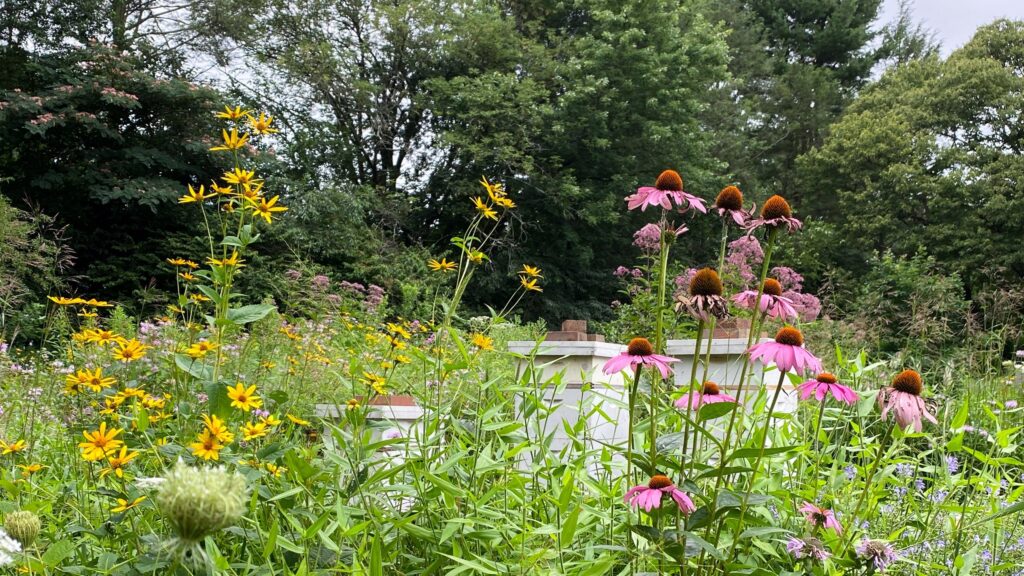
A well-manicured garden has lengthy served because the undisputed uniform of the American suburb—a lush, emerald image of middle-class satisfaction. However one state is looking house owners to believe one thing wilder.
Thru its Garden to Habitat Program, Pennsylvania is providing 300 citizens loose Pocket Meadow Kits to grow to be 1,000 sq. toes of turf into local wildflowers and grasses.
It’s a small program with a miles higher message: By way of returning your garden to nature, you’ll be able to upload herbal range in your backyard, fortify the surroundings, and lower your expenses.
Residential landscaping consumes kind of 9 billion gallons of water on a daily basis, accounting for just about one-third of all residential water use in the USA, in keeping with the EPA. And to deal with that verdant vibrance, house owners practice 80 million kilos of insecticides once a year, to mention not anything of the fertilizing, mowing, and raking a standard garden wishes.
It’s now not an affordable addiction. The everyday family spends $1,000 in line with yr on garden care, contributing to a landscaping business that generated an estimated $188 billion in earnings in 2025.
Now, in a state the place greater than 2 million acres are coated in conventional turf, officers are looking to disrupt that cycle—one pocket meadow at a time.
Why Pennsylvania desires fewer lawns
Pennsylvania’s push towards residential meadows is a part of the state’s technique to meet the Chesapeake Bay Watershed Implementation Plan’s bold targets, in keeping with Program Coordinator Kelsey Mummert.
The plan requires changing 10,000 acres of mowed land into woods and meadows to lend a hand cut back runoff, fortify water high quality, and repair habitat around the watershed.
The size is huge, and the state is discovering good fortune thru incremental adjustments just like the Garden to Habitat program. Since its release in 2020, this system has already facilitated over 650 acres of conversion, in keeping with Mummert.
Whilst the watershed plan equipped the regulatory crucial for this system, Mummert notes that the ecological want has been development for years.
“Habitat loss is a significant driving force of pollinator, fowl, and different natural world declines,” she says. “On the identical time, there is a rising want from Pennsylvanians to do extra for the surroundings in their very own backyards and communities. This program brings the ones wants and needs in combination to change into on-the-ground alternate.”
Conventional turf might glance tidy, but it surely does little to beef up the bugs, birds, and small animals that rely on local vegetation for meals and refuge. A meadow, in contrast, can flip even a modest backyard into a part of a bigger habitat community.
“Changing conventional garden into local meadow has a mess of advantages, from stormwater control to carbon garage to diminished maintenance,” Mummert explains. “Many citizens are maximum keen on planting meadows for the habitat it creates for natural world.”
The stormwater get advantages is particularly vital in evolved spaces, the place compacted soil, pavement, rooftops, and short-rooted turf can ship infected rainwater speeding again into water provide. Local meadow vegetation generally tend to have deeper root techniques, which will lend a hand soak up extra rainfall and sluggish runoff ahead of it carries pollution downstream.
Each and every transformed patch of land could also be small, however in combination, those initiatives can lend a hand communities organize water, beef up biodiversity, and make evolved landscapes paintings more difficult ecologically.
What house owners are pronouncing
Pennsylvania’s wager that citizens are in a position to reconsider their yards seems to be paying off. Programs for the loose kits hit the Division of Conservation and Herbal Sources server’s limits nicely ahead of the time limit, prompting the company to create a separate passion shape for citizens who had been not able to protected a equipment and to gauge call for for long term releases.
That enthusiasm tracks with what Mummert says she’s heard from citizens who’ve already taken phase in garden conversions.
“The most typical sentiment we listen from citizens is authentic pleasure,” Mummert says. “Other folks love seeing the colours, textures, and natural world in their very own backyards.”
The kits are designed to make that first step out there. Each and every one features a seed combine ruled by way of local wildflowers and grasses, together with golden ragwort, slim mountainmint, purpletop, and Appalachian beardtongue.
For Mummert, Appalachian beardtongue is a standout.
“I am specifically keen on Appalachian beardtongue (Penstemon laevigatus),” she says. “It bureaucracy a basal rosette of leaves with a tall stem of tubular, pale-purple blooms that draw in local bees and hummingbirds. It would take a couple of years to turn up in a meadow, however the wait is worthwhile!”
The behind schedule payoff is a part of the purpose. A meadow doesn’t seem in a single day, and it doesn’t glance an identical from backyard to backyard and even yr to yr.
Drew O’Neill, vice chairman of Weeds Inc., an organization that is helping facilitate garden to meadow transformations, says house owners must be expecting the panorama to adapt over a number of seasons.
“It takes roughly 3 to 5 years from the time the seeds are planted for the meadow to achieve adulthood,” O’Neill says. “All over that period of time the meadow is going thru a couple of transitions.”
A brand new form of stewardship
However the attraction of a meadow extends a ways past whimsy or aesthetics. “As soon as established, a meadow is considerably much less of an ongoing upkeep,” O’Neill says.
That doesn’t imply house owners can forget about it totally. However the paintings adjustments from consistent maintenance to periodic control.
“It calls for no fertilization, and the one weed keep an eye on this is finished is to stop invasive weeds from out competing the specified natives,” O’Neill says.
There’s additionally an annual reset, requiring one mowing in line with yr on the finish of iciness to scrub up useless enlargement.
Mummert says that difference is vital—those landscapes are lower-input, however they nonetheless require consideration. Even so, that can be a part of the attraction.
“Citizens continuously describe it as a shift in finding out methods to deal with the land and a dwelling machine in a brand new manner,” she says.
That new standpoint could also be probably the most precious phase. After years of treating yards as one thing to tame, meadows ask house owners to peer them as one thing to beef up. The result’s a special more or less curb attraction—much less polished, extra dynamic, and alive in tactics a standard garden used to be by no means intended to be.