Palo Alto, CA, has balked at an formidable proposal to crack down on billionaires developing multiproperty compounds, equivalent to Mark Zuckerberg’s extremely arguable 11-home unfold.
The Palo Alto Town Council on Monday rejected a movement put ahead through Vice Mayor Greer Stone and Councilman Keith Reckdahl to impose a sequence of restrictions on building timelines, extended vacancies, and the usage of non-public safety guards.
“Homes inside those aggregations are steadily left vacant for prolonged classes, both looking ahead to redevelopment or maintained as non-primary flats,” mentioned a memo outlining the proposal cited through Palo Alto On-line. “This custom reduces the provision [of] housing inventory in Palo Alto at a time when the town is making an attempt to boost up housing manufacturing and deal with affordability issues.”
The initiative attempted to mend an actual downside with the “mistaken instrument,” Alexander Kalla, a San Francisco Bay Space–primarily based actual property agent who works with top internet value purchasers, tells Realtor.com®.
“No person needs their block to become a building zone for a decade,” he says. “However the best way this was once written had some critical problems.”
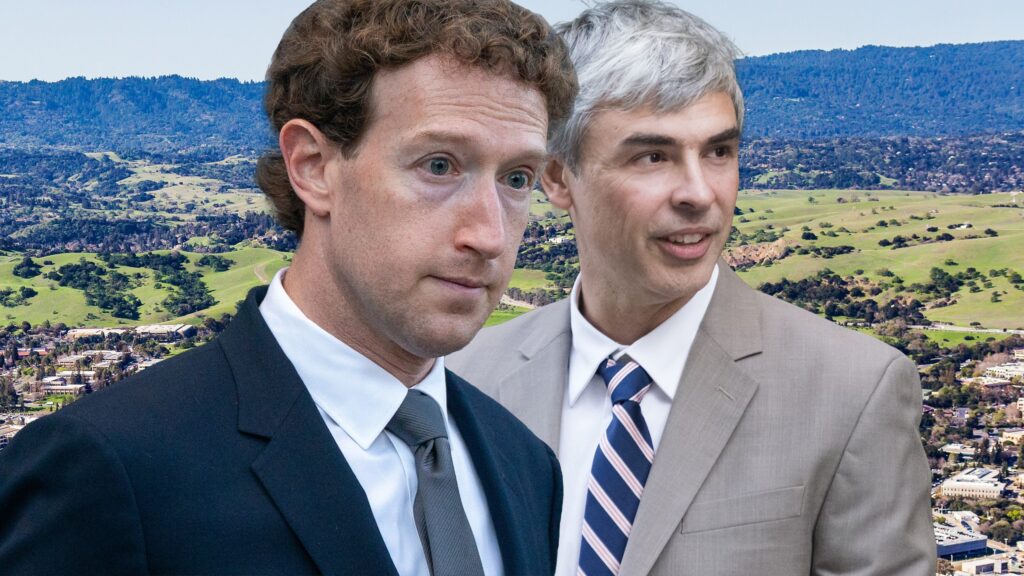
First proposed overdue closing 12 months, the initiative particularly centered citizens buying 3 or extra properties inside a 500-foot radius. It was once an obvious shot throughout Zuckerberg’s bow, after the billionaire Meta CEO raised hackles in his group of Crescent Park through purchasing up a couple of adjoining houses since 2014 to the music of $112 million.
Zuckerberg’s yearslong ambition to cobble in combination an enormous non-public circle of relatives property sparked outrage amongst his neighbors, a few of whom likened the tech rich person’s military of building staff to an occupying drive, because the New York Occasions reported closing 12 months.
Reckdahl and Stone’s plan additionally would have empowered neighbors to sue compound house owners like Zuckerberg for violations without delay—a contentious provision that in the end helped sink the movement this week.
“We’re asking common voters to have the cash and gumption to move up towards the billionaires,” mentioned Councilwoman Julie Lythcott-Haims, one of the vital proposal’s critics.
Kalla is of the same opinion, pronouncing that whilst a coverage permitting criminal motion in idea feels like a take a look at on dangerous conduct, in observe it will have most probably backfired.
“It will have created neighbors towards each and every different and kicked off years of litigation,” he says. “That’s precisely the other of the quiet, tight-knit group really feel persons are paying $10 million-plus to be a part of.”
At Monday’s assembly, Councilman Ed Lauing voiced issues that the “billionaire compound” ban would impinge on non-public estate rights. However Councilman Pat Burt went a step additional, suggesting that concentrated on positive house owners is “truly irrelevant and legally questionable.”
The true property agent Kalla says Burt’s response aligns together with his Bay Space purchasers’ perspectives on homeownership.
“Telling them who they are able to promote to, or what number of a lot subsequent door they are able to personal, looks like executive overreach, and that makes other folks worried about purchasing right here within the first position,” says the agent.
Reckdahl wired that the function of the proposed reform was once to give protection to the nature of the group quite than goal deep-pocketed citizens.
“Those rich other folks purchased in Palo Alto as a result of they prefer the similar issues that we do. They love the parks; they love the standard of existence,” he mentioned right through the assembly. “And sadly, a few of their movements are degrading the very issues that attracted them to Palo Alto. So we truly need to give protection to the neighborhoods and stay it livable, however we don’t need to be punitive.”
Stone, who has been a vocal critic of Zuckerberg’s actual property buying groceries spree, mentioned neighbors are bristling at estate aggregation as it alters the social material in their blocks.
Talking right through the general public remark portion of the assembly, Michael Kieschnick, Zuckerberg’s neighbor, warned of “copycat compounds” which are more likely to turn out to be a pattern.
“What has came about to our group has left a blueprint this is simple for somebody else to observe,” he mentioned.
In truth, the Fb founder isn’t Palo Alto’s sole compound dweller. Google co-founder Larry Web page‘s spectacular estate portfolio features a sprawling selection of a couple of a lot within the Previous Palo Alto group, which induced worry from neighbors.
In other places within the Bay Space, OpenAI CEO Sam Altman has pieced in combination a identical four-property sprawl value over $65 million in San Francisco’s tony Russian Hill enclave.
Council opts for a pared-back means
In the long run, the council settled on a far tamer plan of action, agreeing to check rules on building, domestic vacancies, non-public safety, in addition to the “ghost properties” which are purchased as funding houses after which left unoccupied for years in the course of a housing scarcity.
Kalla applauded the council’s resolution to step again and find out about building have an effect on and emptiness laws citywide.
“Repair the noise, parking, and timeline issues for everybody, and the compound factor most commonly solves itself,” says the agent. “You don’t desire a regulation aimed toward one tax bracket.”
If the proposed crackdown on compounds have been followed, Kalla says it would have stifled Palo Alto’s financial enlargement ultimately.
“If a new-money tech founder is deciding the place to place down roots and sees a Town Council writing customized laws aimed toward other folks like them, they’ll simply take their $50 million construct to Portola Valley or Atherton as a substitute,” he notes. “That’s the true chance—no longer an exodus, however a gradual chilling of latest funding.”
Kalla additionally issues out that formidable building tasks appreciated through the super-rich are extra than simply estate tax line pieces.
“They make use of masses of native contractors, architects, designers, landscapers, and family team of workers,” he says. “Pushing that figure out of Palo Alto would harm numerous small companies that experience not anything to do with billionaires.”