For years, the “power till you qualify” trade-off used to be a staple of the American dream: Patrons may commerce an extended go back and forth for extra affordability and higher sq. photos. However as fuel costs surge national, the maths is now not figuring out.
A gallon of standard unleaded now sits at a mean of $4.53, up greater than $1.40 from a yr in the past, in keeping with AAA. For the estimated 115 million individuals who go back and forth to paintings by means of automobile by myself day-to-day within the U.S., that spike has amounted to a punishing go back and forth tax—one this is now dictating the bounds of the housing marketplace.
“Houston is a using town, no means round it, and fuel costs are completely within the dialog now in some way they were not two years in the past,” says Andrew Gardner founding father of Jump Homes, an actual property services and products corporate based totally in Houston—the place an estimated 1.2 million other people go back and forth to paintings day-to-day.
“Patrons are doing the maths out loud,” Gardner says. “I had a shopper just lately who used to be taking a look at a spot about 45 mins out for the reason that value used to be proper they usually talked themselves out of it in part on go back and forth value. Mentioned they could not justify the fuel on best of the whole lot else.”
How excessive is the ‘go back and forth tax’?
Proximity to paintings has at all times been crucial attention, to make certain—58% of house customers file their go back and forth is a essential attention when opting for the place to are living, in keeping with a survey launched in overdue 2025, earlier than the new spike in fuel costs.
Nevertheless it’s simple to peer how skyrocketing fuel costs have best added to the significance.
The ones mountain climbing costs also are colliding with a surge in go back to workplace mandates, which the Division of Transportation credit for serving to power a 2% build up in highway site visitors around the nation.
As extra staff lose the versatility of far off paintings, they’re discovering themselves again at the highway at a time when the price of commute hasn’t ever been upper.
“If homebuyers have an in-office requirement for paintings, a go back and forth is at all times a think about the place they make a choice to are living,” says Christina Rordam, an actual property agent based totally in Florida. “Inflation has greater the price of items—in some instances patrons’ grocery expenses are double what they have been a pair years again—so when fuel is into the $4 and $5 vary, the gap from house issues extra.”
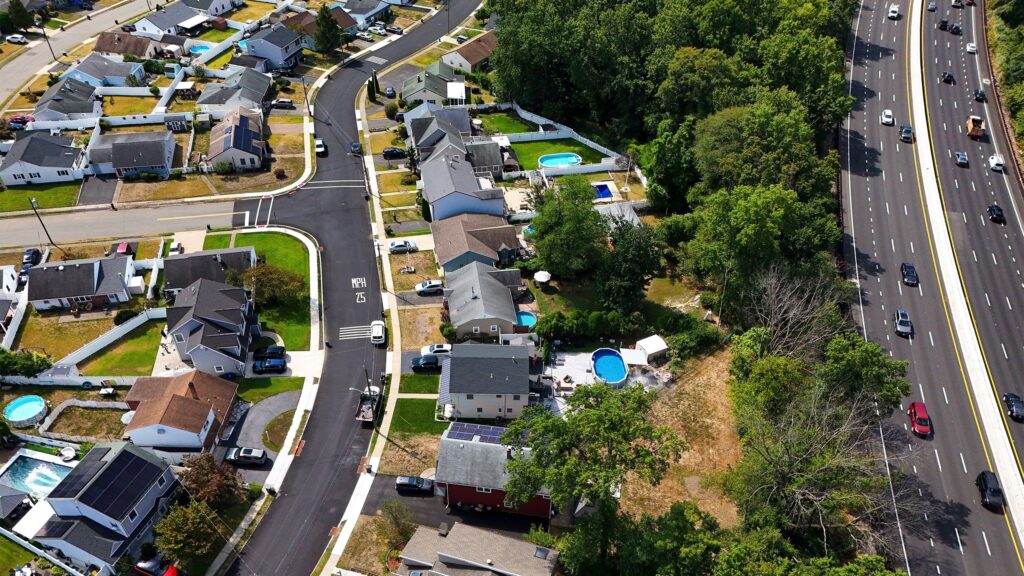
The load is particularly heavy for citizens in commuter cities that have been constructed at the promise of affordability and proximity to primary process hubs.
In California, the present state moderate for normal fuel is $6.16 in keeping with gallon—a $1.38 build up from only a yr in the past. For a standard Culver Town resident commuting 25 miles round-trip into the middle of Los Angeles in a car with moderate gas potency, the price of fuel by myself totals more or less $114 each month.
However the real go back and forth tax contains extra than simply the cost on the pump.
“The psychological load of an extended power in Houston site visitors with fuel at those costs provides up rapid,” says Gardner. “What I am seeing is patrons getting extra fair about the real value of a house. The loan cost is one quantity. The go back and forth is some other. And at this time individuals are including the ones in combination earlier than they make an be offering as a substitute of after.”
Ache on the pump pushes new priorities
Although patrons aren’t appearing line-item calculations on their day-to-day commute bills, actual property brokers file that top fuel costs are manifesting in a focal point on high quality of existence.
In Austin, TX, Michael Reisor, founding father of the Reisor.Group at Compass, says he’s seeing a heightened hobby in walkable neighborhoods that experience get entry to to public transportation.
“Value is at all times one of the necessary elements,” he provides. “However just lately I’ve observed patrons position a better emphasis on how the house will affect their daily way of life.”
This sentiment is echoed by means of Rordam, who just lately helped a high-ranking government commerce a beach-proximate way of life for a townhome nearer to his number one workplace. By means of prioritizing a shorter go back and forth, the patron used to be ready to mitigate each the emerging monetary prices of commute and the lack of non-public time.
Even in South Florida, a marketplace regularly pushed by means of tax benefits and recreational, brokers are seeing a brand new degree of intentionality relating to location and proximity.
“Patrons who’re splitting time between towns or running hybrid are prioritizing proximity to the place they spend the vast majority of their time, whether or not that’s close to faculties, workplaces, or walkable spaces like Coconut Grove,” says Lourdes Alatriste, an actual property agent with DouglasElliman. “It’s much less about the fee on the pump and extra about high quality of existence and minimizing useless commute.”
It’s a pattern she says is especially noticeable amongst transplants from transit-heavy towns like New York or Boston.
“They’re used to public transportation, so after they come right here, they’re considering extra about power instances than they could have a yr or two in the past,” she says. “That’s influencing selections towards extra central neighborhoods as opposed to pushing additional out for house.”