During the last century, no different asset magnificence has come in particular as regards to rivaling shares in annualized returns. Whilst bonds, commodities, and actual property have all greater in worth, the Dow Jones Commercial Moderate (^DJI 0.56%), S&P 500 (^GSPC 0.11%), and Nasdaq Composite (^IXIC +0.35%) have outpaced all of them.
However simply because shares outperform over prolonged timelines, it doesn’t suggest they are with out classes of heightened volatility and declines.
At any given time, a number of catalysts threaten to tug the rug out from underneath traders. Whilst many of those issues sooner or later fade with out factor, some develop into bona fide issues for Wall Boulevard. One historic fear, raised closing 12 months by means of Federal Reserve Chair Jerome Powell, foreshadows big-time hassle for shares.
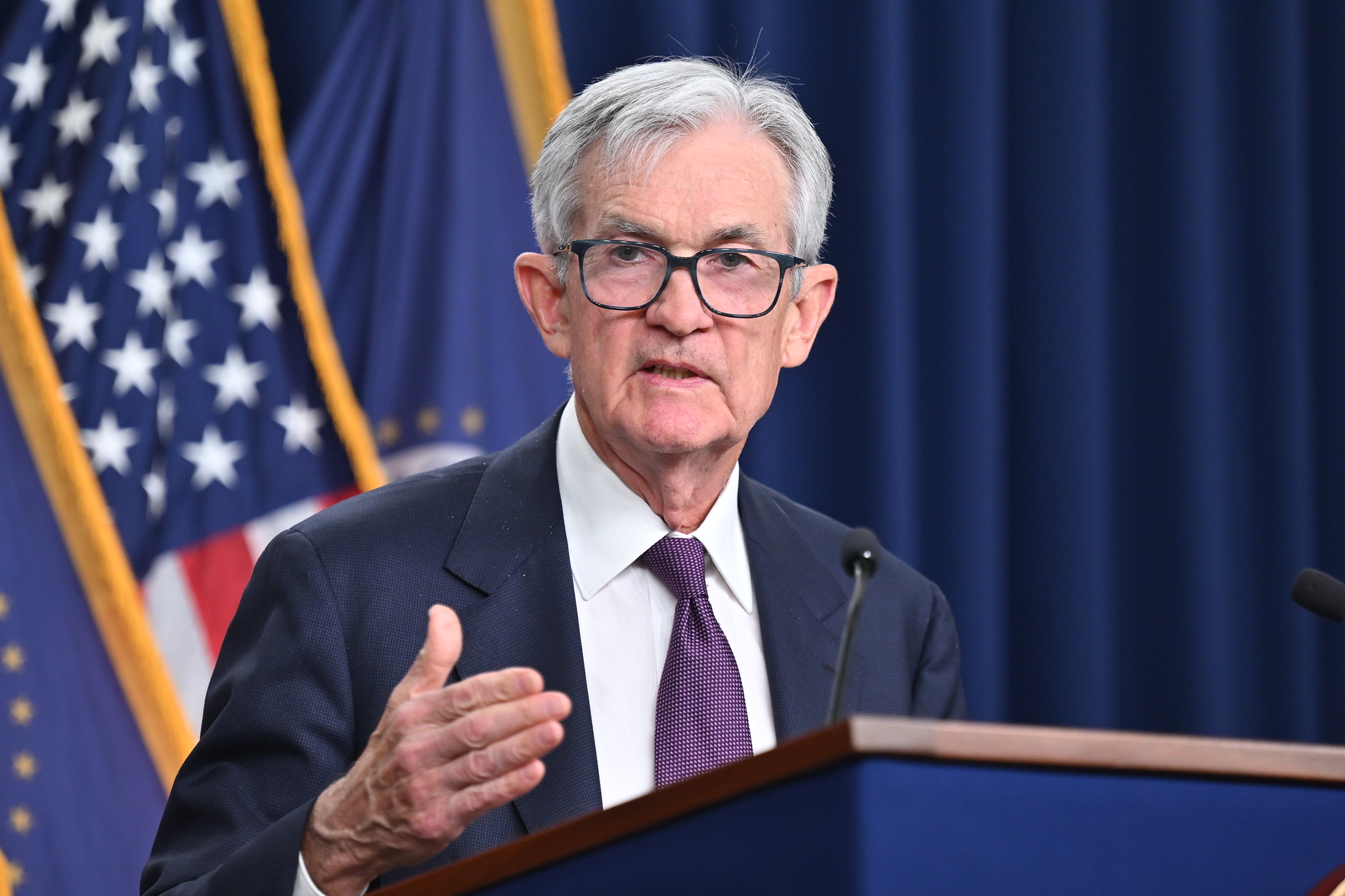
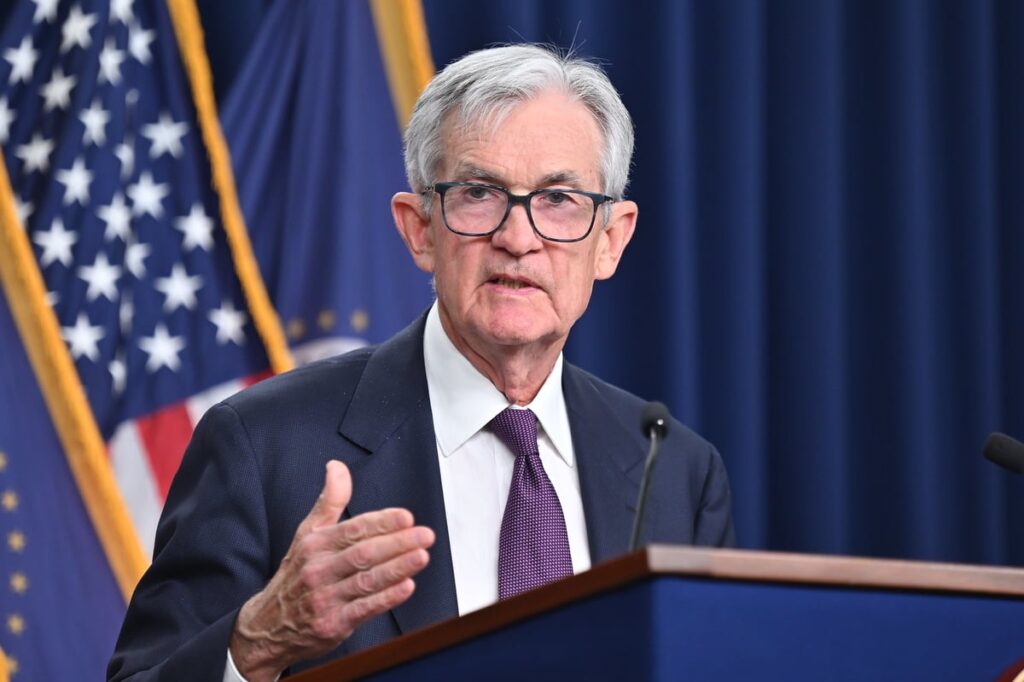
Fed Chair Jerome Powell handing over remarks. Symbol supply: Professional Federal Reserve Picture.
Fed Chair Powell does not mince phrases when speaking in regards to the inventory marketplace
Generally, individuals of the Federal Open Marketplace Committee (FOMC) — the 12-person frame accountable for surroundings U.S. financial coverage — together with Fed Chair Powell, steer clear of making direct observation in regards to the inventory marketplace. The FOMC’s activity is to uphold the twin mandate of maximizing employment and stabilizing costs. How the Dow, S&P 500, and Nasdaq are appearing is never of any end result to the twin mandate.
However on uncommon events all through historical past, Fed chairpersons have chimed in about one particular, historic inventory marketplace chance: valuations.
In December 1996, Fed Chair Alan Greenspan delivered his impassioned “irrational exuberance” speech that highlighted the speedy appreciation of shares following the arrival and mainstream proliferation of the web. Whilst the dot-com bubble sooner or later burst, the peaks of the Dow, S&P 500, and Nasdaq did not happen till greater than 3 years after Greenspan’s speech.
In September 2025, Powell broke from custom and immediately addressed inventory marketplace valuations following a speech. In line with a reporter’s query about how the FOMC accounts for fairness valuations in its financial coverage choices, Powell responded:
We do take a look at general monetary prerequisites, and we ask ourselves whether or not our insurance policies are affecting monetary prerequisites in some way that’s what we are attempting to succeed in. However you are proper, by means of many measures, as an example, fairness costs are somewhat extremely valued.
It is those ultimate six phrases, “fairness costs are somewhat extremely valued,” that are meant to terrify Wall Boulevard.

Symbol supply: Getty Photographs.
Jerome Powell’s caution to Wall Boulevard remains to be more true than ever
Regardless of making this remark about shares in mid-September, the wider marketplace become even pricier, with the S&P 500, Nasdaq Composite, and Dow Jones Commercial Moderate achieving psychologically essential plateaus of seven,000, 24,000, and 50,000, respectively.
However greater than six months later, Powell’s feedback ring true from a historic point of view. Regardless that it is unimaginable to pinpoint when the song will prevent on Wall Boulevard, historical past has served as a information, extra ceaselessly than now not, for traders… and it appears Fed chairs.
The valuation instrument that is sounding alarm bells on Wall Boulevard is the S&P 500’s Shiller Value-to-Profits (P/E) Ratio, which is often referred to as the Cyclically Adjusted P/E Ratio (CAPE Ratio).
While the time-tested P/E ratio accounts for trailing 12-month profits and can also be simply tripped up by means of recessions and surprise occasions, the Shiller P/E is in line with moderate, inflation-adjusted profits over the former 10 years. The CAPE Ratio stays helpful in any financial local weather.
Even supposing economists presented the CAPE Ratio within the overdue Eighties, it is been back-tested over 155 years to January 1871. Over this long span, the S&P 500’s Shiller P/E has averaged 17.35. However the inventory marketplace started 2026 with its second-priciest valuation in historical past — a Shiller P/E above 40.
S&P 500 Shiller PE Ratio hits 2d best degree in historical past 🚨 The best was once the Dot Com Bubble 🤯 pic.twitter.com/Lx634H7xKa
— Barchart (@Barchart) December 28, 2025
Whilst the S&P 500’s Shiller P/E is not a timing instrument, it does have a traditionally immaculate observe report of foreshadowing steep declines within the Dow Jones Commercial Moderate, S&P 500, and/or Nasdaq Composite. The 5 earlier instances it is surpassed 30 all over a continual bull marketplace had been all adopted by means of drops of 20% to 89% in a number of of Wall Boulevard’s primary inventory indexes.
Narrowing issues even additional, the CAPE Ratio has crowned 40 on simply 3 events in 155 years, together with the present bull marketplace. The prior two cases — a 21-month stretch all over the dot-com bubble and the primary week of January 2022 — gave solution to 49% and 25% peak-to-trough declines within the S&P 500, respectively.
Whilst inflationary worries surrounding the Iran battle in short despatched the Dow and Nasdaq into correction territory, it rarely made a dent in a traditionally pricey inventory marketplace. As of this writing, following the remaining bell on April 6, the Shiller P/E is again above 38.
Along with notable declines within the primary inventory indexes, historical past has proven that no vital downturn has ended with a Shiller P/E above 27. If that is the minimal line within the sand for Wall Boulevard, the benchmark S&P 500 may lose a 3rd (or extra) of its worth.
Even supposing Jerome Powell’s time as Fed chair is winding down, his phrases of knowledge about fairness valuations on Wall Boulevard ring more true than ever.