SpaceX’s preliminary public providing is now formally impending. Its ultimate pricing is anticipated on June 11, with public buying and selling to start out on June 12. The newest phrase is that the corporate objectives to boost $75 billion by means of promoting 555.6 million stocks at $135 apiece, implying a company valuation of $1.75 trillion.
That may make it the largest IPO ever on the subject of the full sum of money raised, and on the subject of marketplace capitalization on the time the general public providing is made. Certainly, that valuation would instantaneously make SpaceX the sector’s 9th greatest publicly traded corporate, proper at the back of Broadcom, and simply forward of Elon Musk’s different corporate, Tesla.
Nearly keep in mind that, expectancies are excessive.
This begs the query: What had been the largest U.S.-listed preliminary public choices up till this level, and the way did they carry out out of the gate?
Uber Applied sciences
IPO date: Might 10, 2019
Quantity raised: $8.1 billion
Preliminary valuation: $82.4 billion
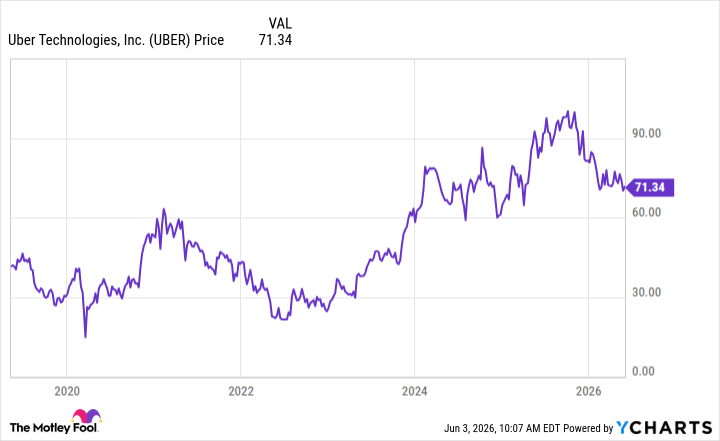
Journey-hailing outfit Uber Applied sciences (UBER 2.08%) arguably waited just a bit too lengthy to move public. Whilst the corporate was once nonetheless happy with its lead to early 2019, insiders had been disenchanted with a last value that got here in closer the ground of its instructed value vary. Had it came about only a few months previous — when the hype surrounding the corporate was once more potent — Uber would possibly have fared higher.
Issues labored out higher in the end for its earliest shareholders, although, permitting them to in at a lower cost in entrance of a 58% achieve since its IPO.
UBER information by means of YCharts.
Uber stocks had been dropping flooring in a while after the preliminary hype pale, however prior to the onset of the COVID-19 pandemic in early 2020 introduced the sector to a screeching halt, together with corporations’ companies. We will by no means know needless to say if the capitulation in March 2020 was once led to by means of the contagion, or if it was once going to occur anyway.
AT&T Wi-fi
IPO date: April 27, 2000
Quantity raised: $10.6 billion
Preliminary valuation: $68.1 billion
Opposite to a not unusual assumption, the AT&T Wi-fi of the early 2000s is not in point of fact the AT&T (T 0.09%) of these days. In reality, AT&T Wi-fi was once technically a by-product from AT&T that will cross directly to be obtained by means of Cingular in 2004. Cingular was once a part of SBC Communications, which might additionally in the end gain the remainder of AT&T anyway, and use the acquainted title as an umbrella for all of its companies. Additionally it is been thru a number of evolutions within the intervening time, together with the purchase and eventual sale of DirecTV, in addition to the acquisition and go out of leisure large Time Warner.
That is why any lookback at this inventory’s post-IPO efficiency could be meaningless. Making it much more meaningless is the truth that it came about proper originally of the tech-wreck of 2000. It wasn’t a publicly traded outfit lengthy sufficient to in point of fact topic.
Symbol supply: Getty Photographs.
For what it is value, although, AT&T Wi-fi’ IPO was once nonetheless record-breaking on the time.
Rivian Automobile
IPO date: Nov. 10, 2021
Quantity raised: $11.9 billion
Preliminary valuation: $66.5 billion
Even supposing it came about smack-dab in the midst of the coronavirus contagion, that was once in reality an excellent time for electrical automobile up-and-comer Rivian Automobile (RIVN 9.77%) to move public. Hobby in shares was once excessive, and investor hobby in electrical automobile producers was once in particular pronounced.
Sadly, that obvious bullishness would implode in a while thereafter. RIVN stocks peaked only a few days after the corporate’s IPO, main right into a sell-off that also has this inventory valued 77% under its public providing value of $78.
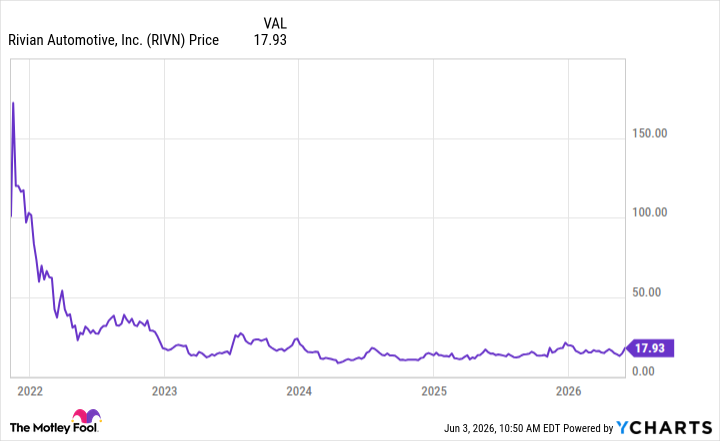
RIVN information by means of YCharts.
Deutsche Telekom
IPO date: Nov. 18, 1996
Quantity raised: €10.0 billion ($13 billion)
Preliminary valuation: $50 billion
Sure, Deutsche Telekom (DTEGY 1.11%) is a German corporate serving the German marketplace. It has got sturdy hyperlinks to the U.S. marketplace, although, and was once very a lot a U.S. inventory when the state-owned telecom provider went public with a New York Inventory Alternate (NYSE) checklist in November 1996. The corporate remains to be the bulk proprietor of American wi-fi powerhouse T-Cellular, and is lately even exploring the possibility of a full-blown merger of the 2 wi-fi outfits.
The NYSE checklist of this ADR (American depositary receipt), created together with its checklist in Germany, has since been downgraded to an over the counter — or OTC — factor. The inventory hasn’t carried out in particular properly since tumbling all the way through, and on account of, the dot-com meltdown of 2000.
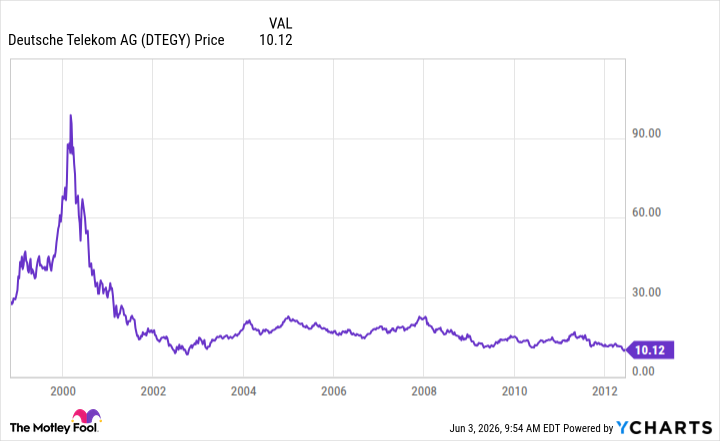
DTEGY information by means of YCharts.
There is not any denying that it had an excessively sturdy get started, despite the fact that it was once fueled by means of the unsustainably bullish hype that was once beginning to company up within the latter part of the Nineteen Nineties.
Common Motors
IPO date: Nov. 17, 2010
Quantity raised: $20.1 billion
Preliminary valuation: $63 billion
It is true! The Common Motors (GM 1.12%) of these days has most effective been publicly traded since past due 2010. There may be some necessary context to keep in mind. The previous Common Motors went bankrupt in 2009, forcing a reorganization that resulted in the advent of brand name new stocks.
Regardless, on the time in their public debut, their sale represented the inventory marketplace’s largest-ever fundraising.
They have got carried out beautiful properly within the intervening time, too. Even supposing they ran right into a headwind in early 2011 that will linger into and thru maximum of 2012, stocks are actually up a bit over 150% since then. That is beautiful spectacular for an automotive maker.
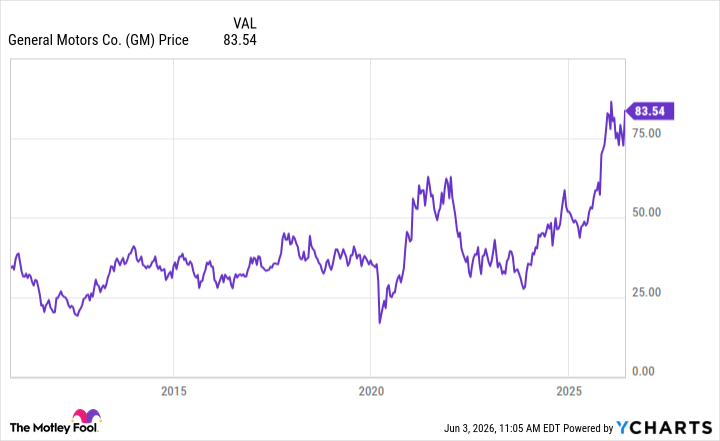
GM information by means of YCharts.
Fb
IPO date: Might 18, 2012
Quantity raised: $16 billion
Preliminary valuation: $104 billion
Meta Platforms (META 5.50%) — again when it was once nonetheless simply Fb — tells one of the crucial marketplace’s maximum cautionary stories about insisting on purchasing newly minted shares once you’ll. It tumbled proper out of the gate, falling greater than 50% over the process the 18 weeks following its Might 2012 public providing.
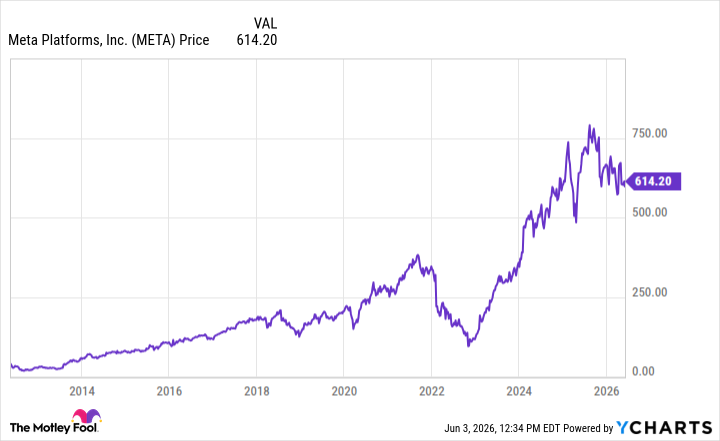
META information by means of YCharts.
Granted, it is since long past on to achieve greater than 1,600% from its public providing value, obviously paying off for affected person shareholders.
Visa
IPO date: March 19, 2008
Quantity raised: $19.1 billion
Preliminary valuation: $39 billion
Even supposing it is been round reputedly ceaselessly, bank card cost community large Visa (V +1.19%) has most effective been publicly traded since early 2008. It is carried out rather well all the way through this 18-year stretch, surging instantly after its stocks started buying and selling at the NYSE.
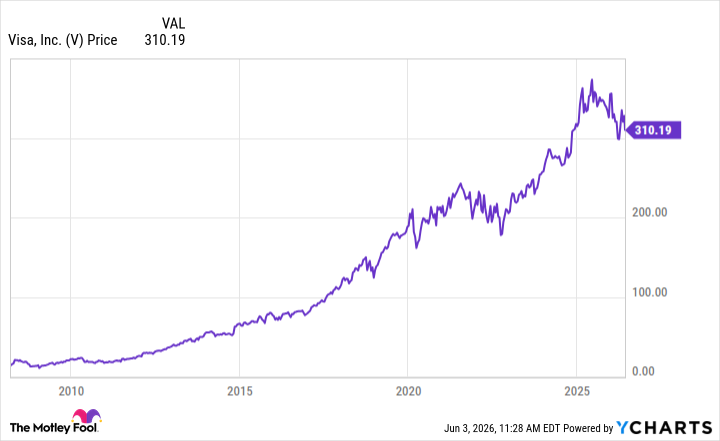
V information by means of YCharts.
Now glance extra carefully on the chart above. Whilst it rallied proper out of the gate and is definitely up for the whole thing of its life, not up to 3 months after its IPO, it was once down greater than 50% from its post-IPO height.
Even so, on the time, its public providing broke U.S. fundraising information.
Alibaba
IPO date: Sept. 18, 2014
Quantity raised: $25 billion
Preliminary valuation: $167.7 billion
In spite of everything, upload China’s e-commerce powerhouse Alibaba (BABA 3.99%) to the checklist of the biggest-ever U.S. public choices. At a complete of $25 billion raised, it is nonetheless technically the largest, actually, despite the fact that that identify is doomed by means of the looming SpaceX IPO.
Like many of the different names on — and now not on — this checklist, BABA inventory were given a gorgeous excellent get started as a publicly traded fairness. On the other hand, additionally like maximum different well-watched IPOs, this one rolled over a few month after its public providing. A little bit over a yr later, stocks had been down by means of greater than part in their post-IPO excessive, falling below their public providing value within the procedure.
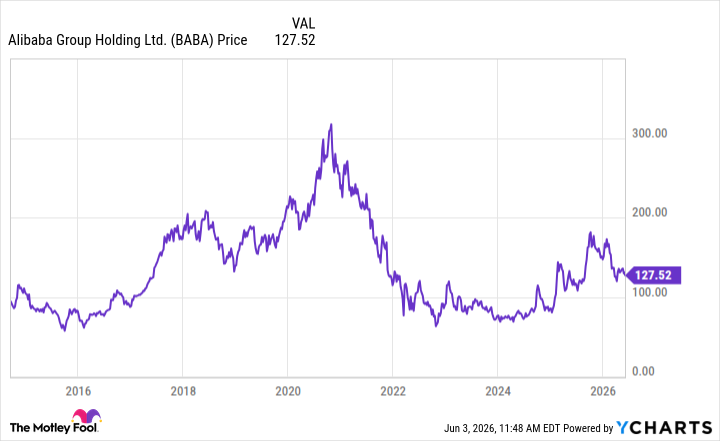
BABA information by means of YCharts.
The inventory’s clearly triumph over this early setback within the intervening time, despite the fact that it is been a spectacularly wild experience.
The takeaway
There are arguably some names lacking from this checklist, like Saudi Aramco, SoftBank, NTT Cellular, and Enel SpA, simply to call a couple of. Those tickers are in large part excluded as a result of those corporations’ number one inventory listings don’t seem to be in the USA, or those names had been — and are — of little hobby to maximum U.S. traders.
The similar underlying patterns that observe to the tickers mentioned above observe to them, on the other hand, simply as they are more likely to observe to the approaching IPO of SpaceX inventory. That is lots of bullish hobby in a while after the inventory begins buying and selling, adopted by means of a chronic duration of weak point rooted within the truth that those shares’ early valuations are not making lots of sense. There was once merely an excessive amount of hype doing an excessive amount of paintings early on.
Nonetheless, there is not any denying that these types of sizable, high-profile public choices ended up panning out well for affected person early shareholders.