You by no means get a 2d likelihood to make a primary impact. It is excellent recommendation on the whole, however is especially necessary while you’re on the point of promote your house.
To draw homebuyers proper off the bat and make sure your private home looks as if 1,000,000 greenbacks, even from the road, curb enchantment will have to be best of thoughts.
Border vegetation are one simple and inexpensive approach to spice up your curb enchantment and get your house off the marketplace very quickly. Let’s take a more in-depth have a look at what border vegetation are and the way you’ll use them on your merit.
What are border vegetation?
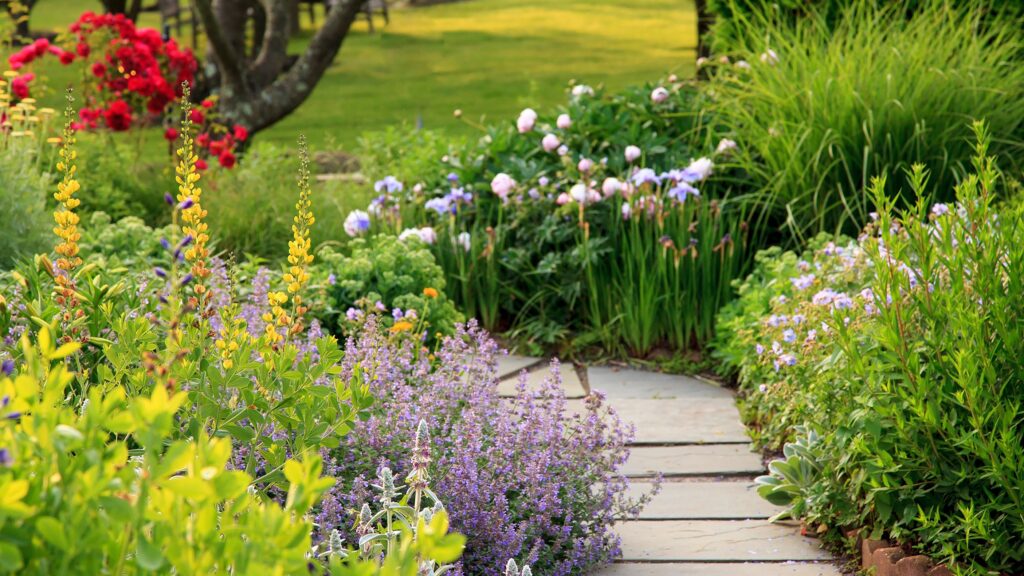
Put merely, border vegetation are shrubs or plants you plant alongside the perimeters of flower beds, walkways, fences, driveways, or different panorama options to outline areas, create construction, and upload visible enchantment. Those vegetation may also be small, like creeping floor covers, or higher shrubs that shape dwelling hedges or herbal obstacles.
“Without reference to dimension, border vegetation lend a hand spotlight explicit spaces of your backyard, drawing certain consideration and making your panorama seem extra arranged and thoughtfully designed,” says Julia Omelchenko, resident botany knowledgeable at Plantum, an app designed to simplify plant care.
Border vegetation may also be planted in several portions of your backyard, now not simply alongside the root of your house. You could plant them alongside fences, alongside driveways, and even close to the trunks of enormous bushes so as to add pops of colour.
“They’re additionally nice for framing patios, surrounding gazebos, highlighting flower beds, or marking the perimeters of lawn paths,” explains Omelchenko.
5 forms of border vegetation and the right way to take care of them
1. Hydrangeas
Hydrangeas thrive in reasonable climates and partial coloration, making them superb border vegetation for the Northeast, Midwest, and Pacific Northwest states.
Hydrangeas are identified for his or her huge, showy blooms in sunglasses of blue, crimson, crimson, and white. Curiously, the colour of a few hydrangea species can trade relying on soil acidity. As an example, their plants flip blue in acidic soil and crimson in alkaline soil.
“The most efficient time to plant hydrangeas is in spring or fall when temperatures are reasonable. Hydrangeas in most cases succeed in adulthood and start blooming inside two to 4 years,” explains Omelchenko.
Plant them in a location with morning solar, afternoon coloration, and well-drained, nutrient-rich soil.
Since hydrangeas love moisture, they want further deep watering all through dry spells.
“Hydrangeas glance shocking alongside fences, belongings borders, or the perimeters of the home. Their rounded, lush shape and massive plants create a dramatic, sumptuous impact that straight away boosts curb enchantment,” provides Omelchenko.
2. Lily of the Nile (Agapanthus)
The lily of the Nile is local to South Africa and grows properly in heat areas like California, the Southeastern U.S., Texas, and Arizona. This plant’s plants typically are available in wealthy blue, crimson, or white hues. They shape lush clusters on best of tall stems, giving them a placing look. The most efficient time to plant the lily of the Nile is in spring after the remaining frost.
“The plant prefers vibrant sunny spots however can tolerate partial coloration in sizzling climates. It wishes well-drained soil and turns into drought-tolerant as soon as established. Water it slightly and steer clear of overwatering, as an excessive amount of moisture may cause root rot,” says Omelchenko.
The lily of the Nile appears beautiful alongside driveways, lawn paths, or close to patios. Its vertical traces upload top and style, making it a perfect selection for extra formal, vintage designs. Moreover, its tall, upright blooms distinction superbly with lower-growing border vegetation.
3. Holly (Ilex)
The holly is local to Europe, North The united states, and Asia and is perfect for many areas within the U.S. Even supposing it’s widely known for its shiny inexperienced leaves and vibrant pink berries, this border plant may also function white or yellow edges, including further ornamental enchantment.
“Holly shrubs are best possible planted in spring or fall. They develop slowly however sooner or later shape dense, sexy trees,” says Omelchenko.
Those vegetation require common watering and will have to be pruned in past due wintry weather or early spring so as to add form and keep watch over their dimension.
“The holly is superb for growing borders alongside fences, belongings traces, or round area foundations,” explains Omelchenko.
4. Lilac (Syringa vulgaris)
The lilac, or Syringa vulgaris, is local to the Balkan Peninsula in Southeast Europe and prospers in cooler climates. Its stunning spring blooms glance their best possible after a chilly wintry weather, which is very important for bud formation.
Lilacs are well-known for his or her pastel sunglasses—lavender, crimson, blue, and white—in addition to brilliant deep crimson blooms. They’re additionally extremely prized for his or her wealthy, candy perfume. Lilac bushes draw in butterflies and different pollinators. As an advantage, their plants are superb for bouquets.
“Plant lilacs in early spring or fall. They in most cases start blooming one to 2 years after planting, and with correct care, lilac trees remaining for a few years and reliably bloom every spring,” says Omelchenko.
They want no less than six hours of daylight an afternoon and well-drained, relatively alkaline soil. Prune them in an instant after flowering to deal with the form and inspire considerable blooms the next yr.
“Lilacs are ideal for planting alongside fences or lawn edges, the place you’ll absolutely revel in their smell. Planting them close to home windows or seating spaces, like round a gazebo, is a smart thought to permit the springtime perfume to fill the air,” provides Omelchenko.
5. Black-eyed Susan (Rudbeckia)
The black-eyed Susan is local to North The united states and adapts to a variety of climates however prefers sunny places with well-drained soil. Those cheerful plants resemble daisies, that includes golden-yellow petals with darkish brown or just about black facilities.
“The most efficient time to sow the seeds is in spring after the remaining frost. If sown early, many cultivars will bloom the similar yr or the next yr if planted later. Numerous black-eyed Susan types may also readily reseed themselves yr after yr,” says Omelchenko.
As soon as established, black-eyed Susans are low-maintenance and drought-tolerant. They thrive in complete solar and bloom from midsummer to early fall.
“Black-eyed Susans are superb for bordering flower beds, driveways, or round mailboxes. Their vibrant blooms in an instant catch the attention and pair properly with taller shrubs or decorative grasses,” explains Omelchenko.
Those border vegetation also are deer-resistant as they do draw in butterflies and different pollinators. Because of their lengthy blooming length and simple care necessities, black-eyed Susans are well-liked by each novices and skilled gardeners alike.